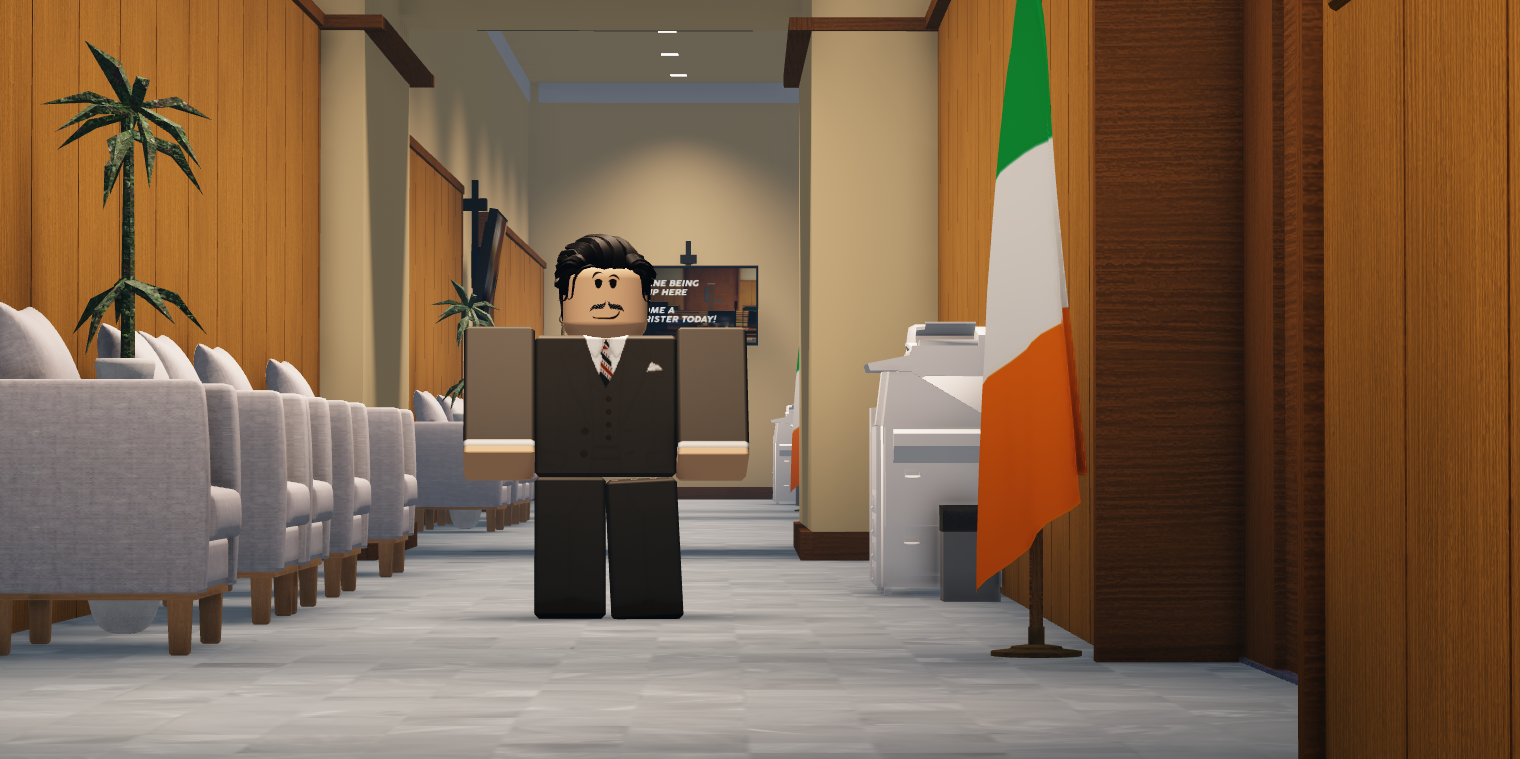
Dublin — Labour Senator MRBRUCEISMAY22 has filed an application for injunction relief in the High Court of Ireland, challenging his designation as a National Security Threat under the National Security Act 2023. The application, filed on behalf of the claimant by legal representative LouiSGMiddleton, alleges serious procedural violations in the designation process and seeks multiple forms of relief from the Court.
The case comes amid a broader controversy involving the National Security Committee's handling of Four Star Party members, with the Taoiseach subsequently intervening to remove threat designations pending a full external investigation.
Court Application Details
The High Court application seeks five primary forms of relief:
Application to the High Court of Ireland
- An injunction compelling the National Security Committee ("NSC") or its Chair or Counsel to the report per Article 15 under the Official Secrets Act 2023 ("OSA"), the factual and legal basis underlying the Claimant's designation as a National Security Threat ("NST"), pursuant to Section 3 of the National Security Act 2023 ("NSA").
- An injunction restraining the Respondents from taking any action, imposing treatment, or otherwise treating the Claimant as a National Security Threat ("NST") under Section 3(7) of the National Security Act 2023 ("NSA") unless and until proper notice is issued.
- An order directing the Court to conduct a closed-material review of the NSC's decision-making process, including but not limited to the NSC vote, classification basis, and evidence relied upon, with the Court determining what information (if any) may be lawfully disclosed to the Claimant.
- A declaration that the Claimant's NST designation is unlawful, irrational, procedurally unfair, or otherwise ultra vires should the Respondent fail to demonstrate compliance with the NSA and OSA.
- Any further order the Court deems just and equitable, including directions for redactions, summaries, or special-advocate procedures.
Claimant's Key Arguments
The application outlines three central factual claims that form the basis of the Senator's legal challenge:
1. Lack of Formal Notification
The Claimant asserts that he has never been formally notified by the Chair of the National Security Committee, or any authorised officer, that he has been designated an NST under the NSA of 2023.
2. Public Statements as Sole Evidence
According to the application, public statements made by the Taoiseach indicated that the Senator was designated a National Security Threat due to four star party membership, allegedly characterised as extremist or "fascist," and reportedly advocating for the invasion of Ireland—claims for which no evidence has been publicly produced.
3. Absence of Admissible Evidence
The claimant's legal team argues that public statements are the only admissible indications that any such designation exists. They further contend that these statements are the only admissible items that insist the Claimant did indeed advocate for the stipulated causes. The application states that no such information has been made public or disseminated to the Claimant as procedure requires.
Evidence Submitted to the Court
The claimant has submitted admissible evidence to support his case, including screenshots of communications dated 7 December 2025 that appear to show discussions about Four Star Party membership and National Security Threat designations. The submitted evidence forms part of the Court's review of the case.
The application emphasizes that initial indication the Claimant was officially designated a National Security Threat was found in public statements by the Taoiseach, who affirmed the status of the claimant as a designated National Security Threat and discussed the rationale behind such designations.
National Security Committee Controversy
The case emerges from a contentious National Security Committee process that has since drawn criticism for procedural irregularities. On 28 November 2025, a motion was presented to the NSC to designate several members of The Four Star Party—described as a "far-right, self-described 'Fenian-killing' British political party"—for their alleged involvement in efforts to form a coalition to invade Ireland.
Timeline of Events
- 28 November 2025: National Security Committee votes on Four Star Party member designations
- Initial vote: 4-0 vote declared "failed" under misunderstanding that absolute majority was required
- Subsequent clarification: Simple majority confirmed as legal requirement; vote determined to have passed
- Key failure: NSC Chairperson WilliamCathcart failed to notify designated individuals as required by law
- 7 December 2025: Evidence screenshots submitted showing discussions about designations
- 8 December 2025: High Court application filed by MRBRUCEISMAY22
Taoiseach's Intervention and Statement
In response to the procedural failures identified in the NSC process, Taoiseach leahvnx issued a statement in Government Announcements addressing the mishandled designation process:
📢 Official Government Statement
"On 28 November 2025, a motion was presented to the National Security Committee to designate several members of the far-right, self-described 'Fenian-killing' British political party, The Four Star Party, for their involvement in efforts to form a coalition to invade Ireland. These actions were considered a threat to Irish sovereignty.
The Committee initially understood that an absolute majority was required, and the vote (4-0) was declared failed. After further review and consultation, it was clarified that only a simple majority is required, meaning the vote legally passed.
Under the National Security Act, it is the duty of the Committee Chairperson, WilliamCathcart, to notify the individuals of their designation. This was not done, and the process was mishandled.
Accordingly, I have moved to remove the threat designation for these members and have requested a full, fair, external investigation into each individual before any revote is presented to the Committee.
For any questions, please contact me directly."
— Taoiseach leahvnx
The Taoiseach's decision to remove the designations and order an external investigation represents a significant government acknowledgment of procedural failures in the National Security Committee's handling of the matter.
Legal and Political Implications
The High Court case raises important questions about due process protections under Ireland's National Security Act 2023, particularly regarding the rights of individuals designated as national security threats to receive formal notification and understand the basis for their designation.
Legal experts note that the case could establish important precedents for transparency and procedural fairness in national security matters, balancing legitimate security concerns with fundamental rights to fair treatment under law.
Claimant's Political Context
MRBRUCEISMAY22 currently serves as a Labour Party Senator in Seanad Éireann and has recently secured sufficient nominations to compete in the Labour Party leadership election following the resignation of former leader AndrewEHarris. The National Security Threat designation controversy occurs during this critical leadership race, adding political complexity to the legal proceedings.
The Senator's legal challenge appears to rest on fundamental claims of procedural unfairness—specifically, the failure to provide formal notification of the designation and the lack of disclosure regarding the factual and legal basis for the NST determination.
Next Steps
The High Court will now consider the application for injunction relief and determine whether to grant the requested orders. If the Court proceeds with a closed-material review as requested, it would examine the National Security Committee's decision-making process, including classified evidence and the NSC vote, while determining what information can be lawfully disclosed to the claimant.
The case is likely to proceed alongside the external investigation ordered by the Taoiseach, which will examine each individual's case before any potential revote by the National Security Committee.
RTÉ will continue to follow this developing story and provide updates as the High Court proceedings advance.
Background: The Irish Examiner Report
The National Security Threat designation was first reported by the Irish Examiner, which broke the story about the National Security Committee's vote concerning Four Star Party members. That initial reporting has now been followed by this significant legal challenge in the High Court.
The case underscores ongoing tensions between security imperatives and civil liberties protections, with the judiciary now positioned to review the executive's exercise of national security powers under the 2023 legislation.
← Back to RTÉ News